How to Build Calm Money Habits That Actually Last
A step-by-step guide to calm money habits that reduce stress, improve control, and build lasting confidence.

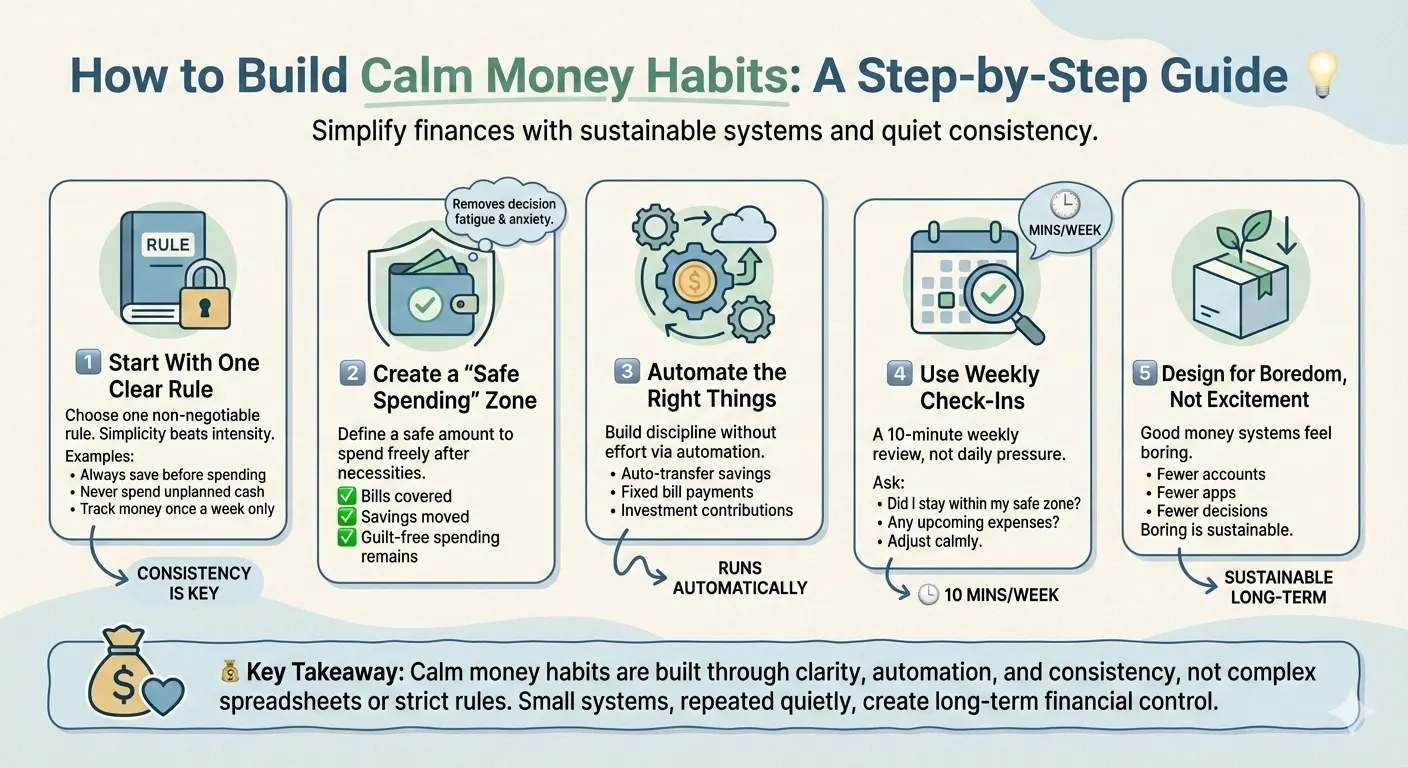
Managing money doesn’t have to feel stressful or restrictive. This how-to guide shows you how to build calm, sustainable money habits that work quietly in the background of your life 💰
Step 1: Redefine What “Good Money Management” Means
Many people chase perfection. Calm money habits focus on consistency, not control.
Money works best when it supports your life, not when it dominates your thoughts.
Start with this mindset shift: progress matters more than precision.
Step 2: Create One Simple Money Rule
Instead of many rules, choose one clear principle you can follow daily:
-
Spend less than you earn
-
Save before spending
-
Track only large expenses
One rule = less mental fatigue 🧠
Step 3: Automate What Causes Stress
Automation removes emotion from decisions:
-
Automatic savings transfers
-
Scheduled bill payments
-
Fixed investment contributions
If a habit is automated, it doesn’t rely on motivation.
Step 4: Use “Soft Tracking” Instead of Strict Budgets
Rather than tracking everything, review your money weekly:
-
Check total spending
-
Notice trends, not mistakes
-
Adjust gently
This keeps awareness high without guilt.
Step 5: Build a Financial Buffer First
Before big goals, focus on stability:
-
Small emergency fund
-
One month of predictable expenses
Security creates calm before growth 🛡️
Step 6: Schedule a Monthly Money Reset
Once a month, ask:
-
What worked?
-
What felt stressful?
-
What can be simpler next month?
Calm finances come from reflection, not restriction.
Step 7: Protect Your Energy
Avoid constant financial content and comparisons. Too much advice leads to confusion.
Clarity grows in quiet spaces ✨
Final Thought
Calm money habits aren’t about doing more. They’re about doing less, better, and consistently. When money feels predictable, confidence follows—and financial growth becomes a natural result.