How to Control Spending Without Tracking Every Expense
A clear how-to guide that shows how to control spending through structure and habits, without tracking every purchase or using complex budgets.
Tracking every expense can feel exhausting. This guide shows a simpler way to control spending by changing structure, not effort. 💡
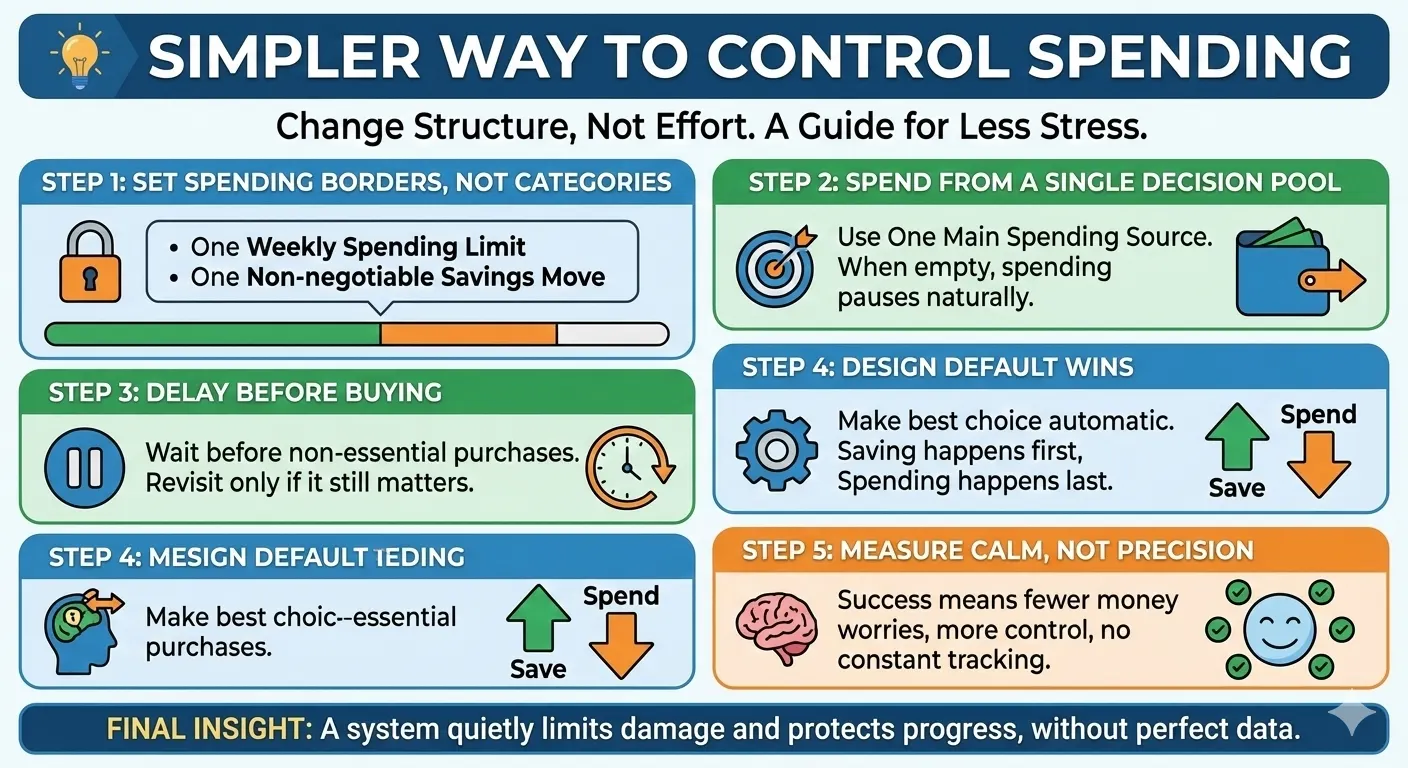
Step 1: Set Spending Borders, Not Categories 🧱
Instead of many categories, define:
-
One weekly spending limit
-
One non-negotiable savings move
Borders guide behavior better than detailed rules.
Step 2: Spend From a Single Decision Pool 🎯
Use one main spending source.
When it’s empty, spending pauses naturally.
This removes constant micro-decisions.
Step 3: Delay Before Buying ⏸️
Add a short pause rule:
-
Wait before non-essential purchases
-
Revisit only if it still matters
Time filters impulse better than discipline.
Step 4: Design Default Wins ⚙️
Make the best choice automatic:
-
Saving happens first
-
Spending happens last
Less thinking, better results.
Step 5: Measure Calm, Not Precision 🧠
Success means:
-
Fewer money worries
-
More control
-
No constant tracking
Final Insight ✅
You don’t need perfect data to manage money.
You need a system that quietly limits damage and protects progress.