How to Create a Personal Spending Compass That Guides Decisions
A practical method to build a personal spending compass that helps you make confident money decisions without guilt, stress, or constant budgeting.
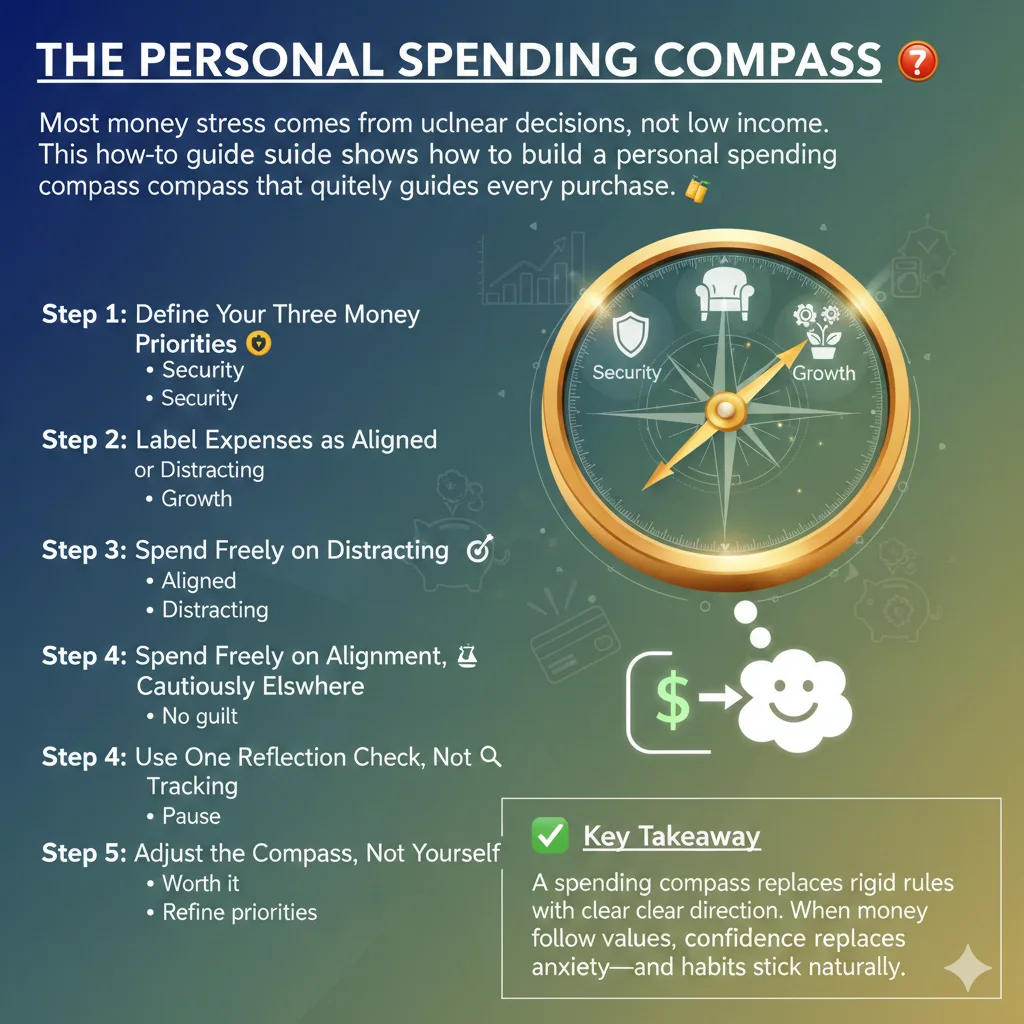
Most money stress comes from unclear decisions, not low income. This how-to guide shows how to build a personal spending compass that quietly guides every purchase. 💰
Step 1: Define Your Three Money Priorities 🧭
Choose only three areas that truly matter to you:
-
Security
-
Comfort
-
Growth
(or your own versions)
Money feels lighter when it follows clear priorities.
Step 2: Label Expenses as Aligned or Distracting 🎯
For each purchase, ask:
-
Does this support my priorities?
-
Or does it distract from them?
No judgment—just direction.
Step 3: Spend Freely on Alignment, Cautiously Elsewhere ⚖️
When spending aligns:
-
No guilt
-
No second guessing
When it doesn’t:
-
Pause
-
Reduce
-
Delay
Freedom grows when spending has meaning.
Step 4: Use One Reflection Check, Not Tracking 🔍
Once in a while, review:
-
What felt worth it?
-
What didn’t?
Awareness beats detailed tracking.
Step 5: Adjust the Compass, Not Yourself 🔄
If stress appears:
-
Refine priorities
-
Clarify values
Never assume discipline is the problem.
Key Takeaway ✅
A spending compass replaces rigid rules with clear direction. When money decisions follow values, confidence replaces anxiety—and habits stick naturally.