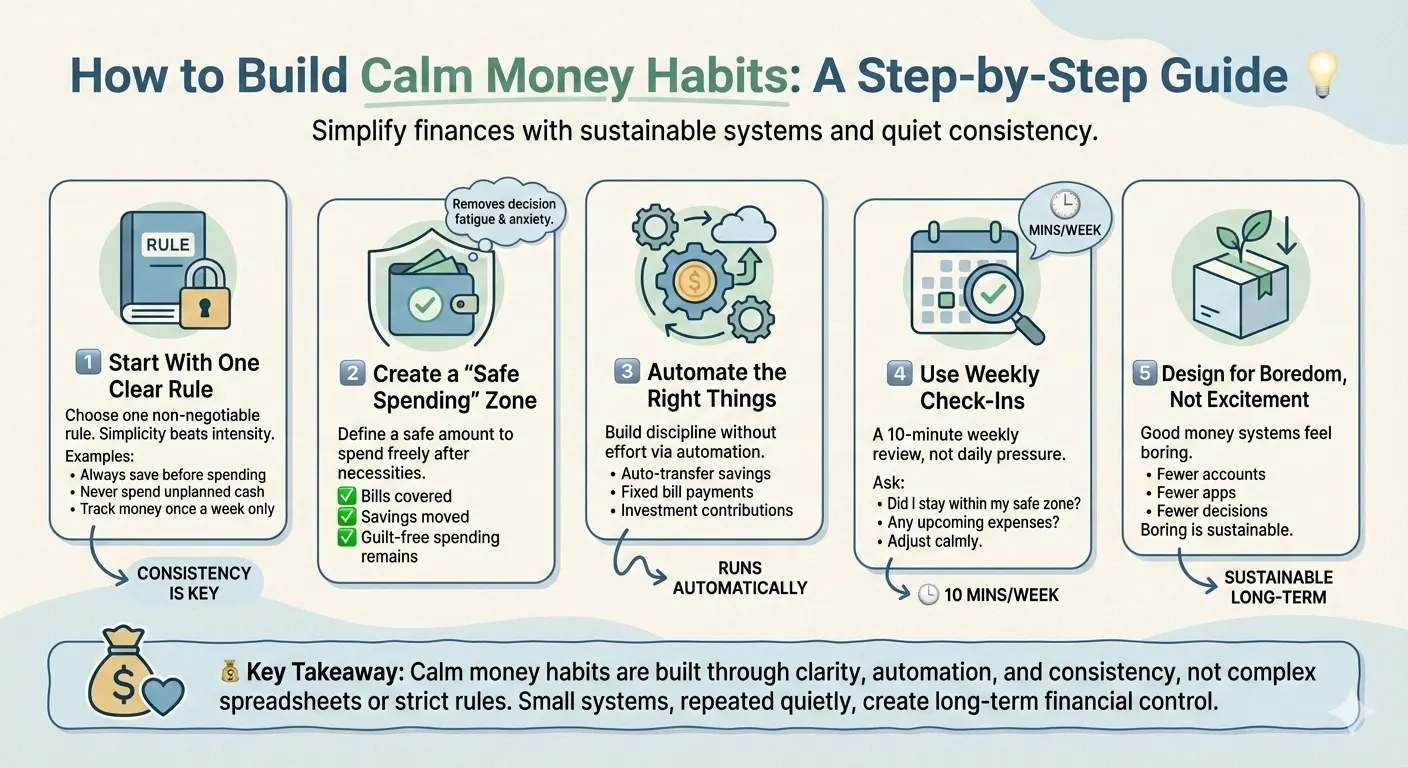
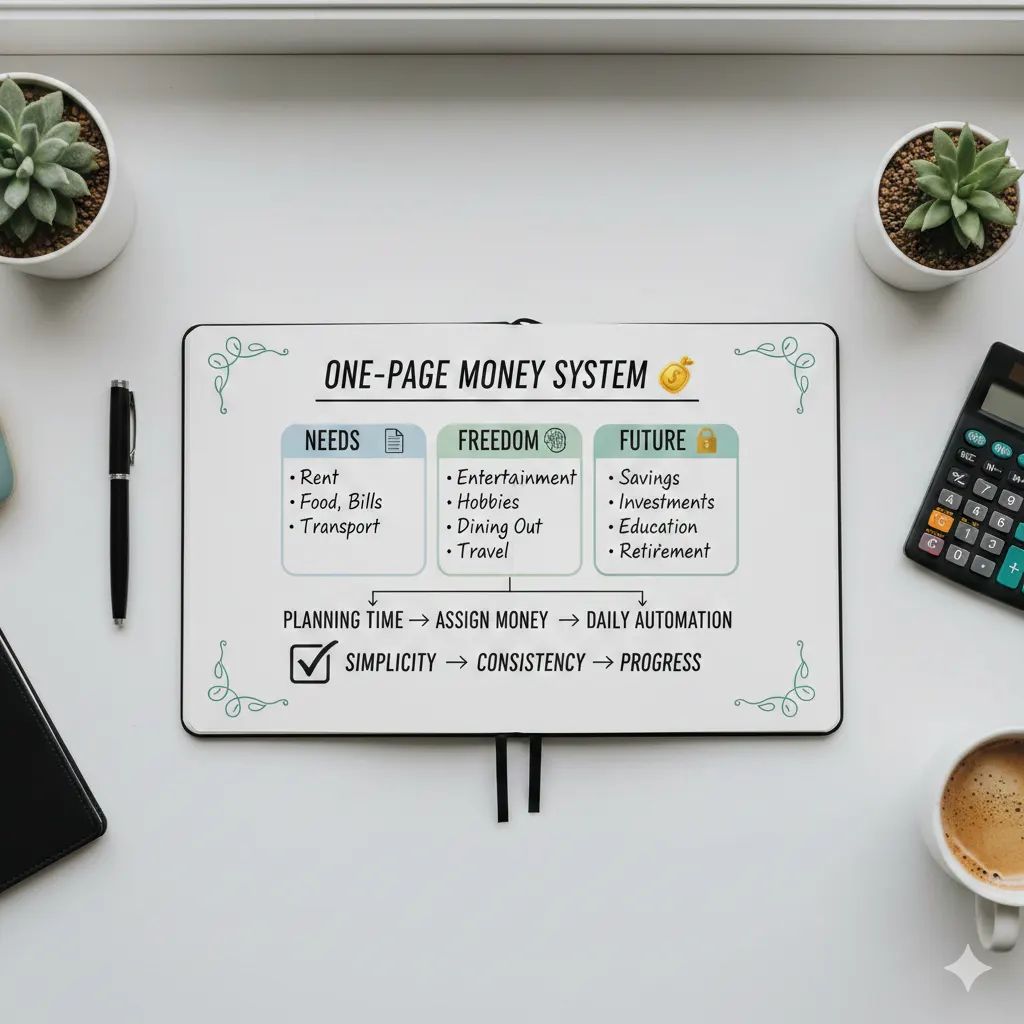
How to Design a Personal Money System That Works Automatically
A practical guide to creating a personal money system that runs quietly in the background, reduces stress, and supports long-term financial balance.
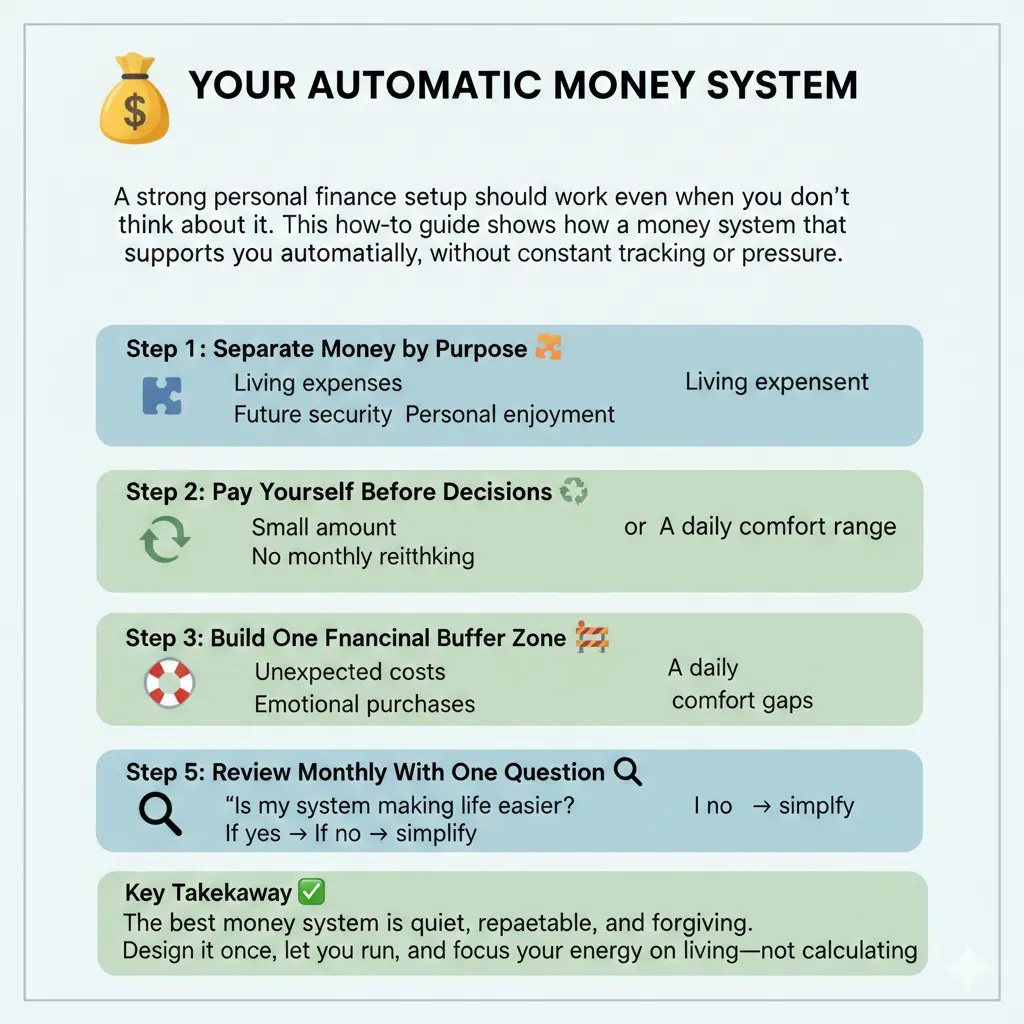
A strong personal finance setup should work even when you don’t think about it. This how-to guide shows how to design a money system that supports you automatically, without constant tracking or pressure. 💰
Step 1: Separate Money by Purpose 🧩
Create clear roles for your money:
-
Living expenses
-
Future security
-
Personal enjoyment
When money has a job, it stops creating mental noise.
Step 2: Pay Yourself Before Decisions 🔁
Move savings automatically as soon as money arrives.
-
Small amount
-
Fixed rule
-
No monthly rethinking
Automation beats motivation every time.
Step 3: Use One Spending Boundary 🚧
Set one simple limit:
-
A weekly spending cap
or -
A daily comfort range
Avoid tracking every transaction—track the boundary instead.
Step 4: Build a Financial Buffer Zone 🛟
Keep a calm reserve for:
-
Unexpected costs
-
Emotional purchases
-
Income gaps
Buffers protect your habits, not just your wallet.
Step 5: Review Monthly With One Question 🔍
Ask:
“Is my system making life easier?”
If yes → keep it
If no → simplify
Key Takeaway ✅
The best money system is quiet, repeatable, and forgiving. Design it once, let it run, and focus your energy on living—not calculating.